Codex Colombino
About the Codex
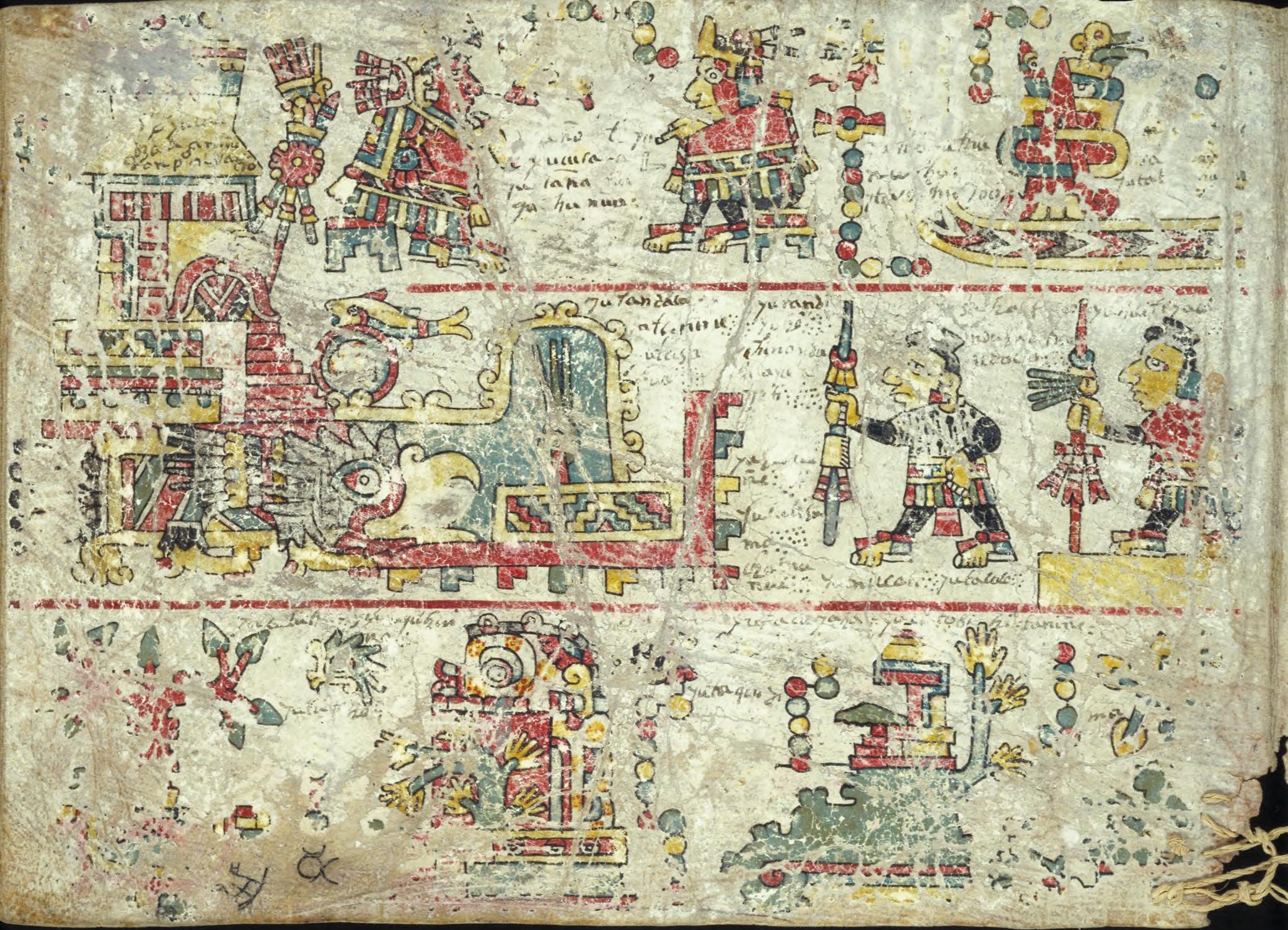
According to Antiguedades Mexicanas: Textos the original Codex Colombino was a pre-Conquest Mixtec codex, painted on a strip of deerskin 6.8 meters long and 20 centimeters wide, folded accordion-style to form twenty-four pages. This strip was treated with a whitish varnish to preserve its vibrant colors of red or crimson, green, blue, yellow, black, and white. At the time of writing Textos, it was unclear to the Junta Colombina what the codex was depicting, leading to the guess that it was a ritual calendar. They believed it was a ritual calendar due to the different colored small circles they recognized from other codices thought to indicate the counting of days or years.
How To Read This Codex
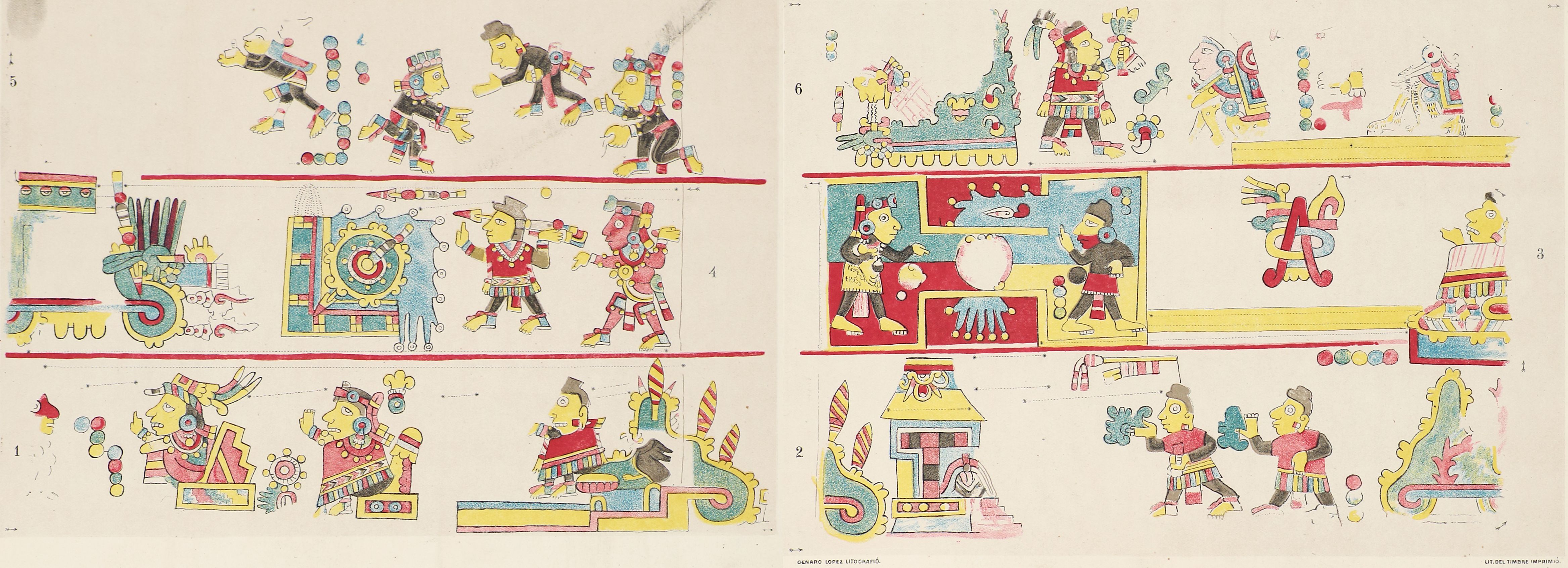
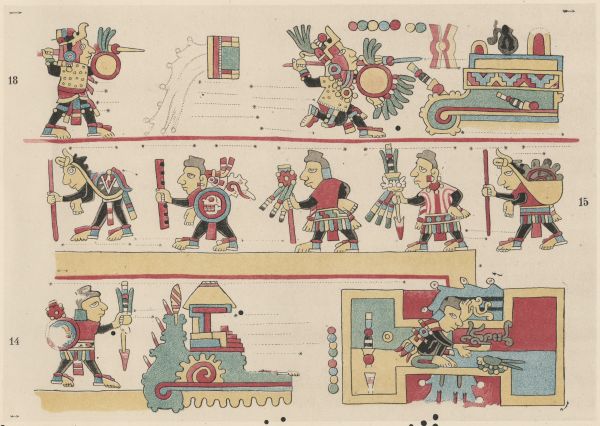
The Codex Colombino is meant to be read in a zigzag pattern: start at the bottom left and move to the right, then up to the next row and read left to right, continuing upward and across in alternating directions as demonstrated below:

Codex Colombino as Codex Iya Nacuaa I
The name Codex Colombino emerged centuries after its creation, when it was published in 1892 by the Junta Colombina for the 1892 Madrid exposition. A second related fragment, known as Codex Becker I, was named for a nineteenth-century German collector who brought it to Europe. These names reflect moments of European possession and scholarship rather than Indigenous meaning. Today, scholars like as Jansen and Pérez Jiménez propose the name Codex Iya Nacuaa I, restoring attention to the manuscript’s Indigenous origins.
Who would think that the dramatic story of the life of a major figure in that history, Iya Nacuaa ... is told in a manuscript called Codex Colombino-Becker? (Jansen & Pérez Jiménez, p. 257)
Ancient Manuscript, Modern Nation
Bien merecía llevar el nombre de Colón este códice, que acaso servirá para descubrir un nuevo mundo del espíritu humano. (Junta Colombina, p. XI)
The above quote from Antiguedades Mexicanas: Textos roughly translates to "This codex truly deserves to bear the name of Columbus, as it may well serve to discover a new world of the human spirit." This statement reveals how Porfirian scholars linked Indigenous antiquity to European narratives of discovery, recasting a pre-Hispanic Mixtec manuscript as an object whose value was realized through modern interpretation. In doing so, the codex was positioned as both an ancient source of national prestige and a symbol of Mexico’s intellectual modernity.
Comparing the Original and the 1892 Reproduction
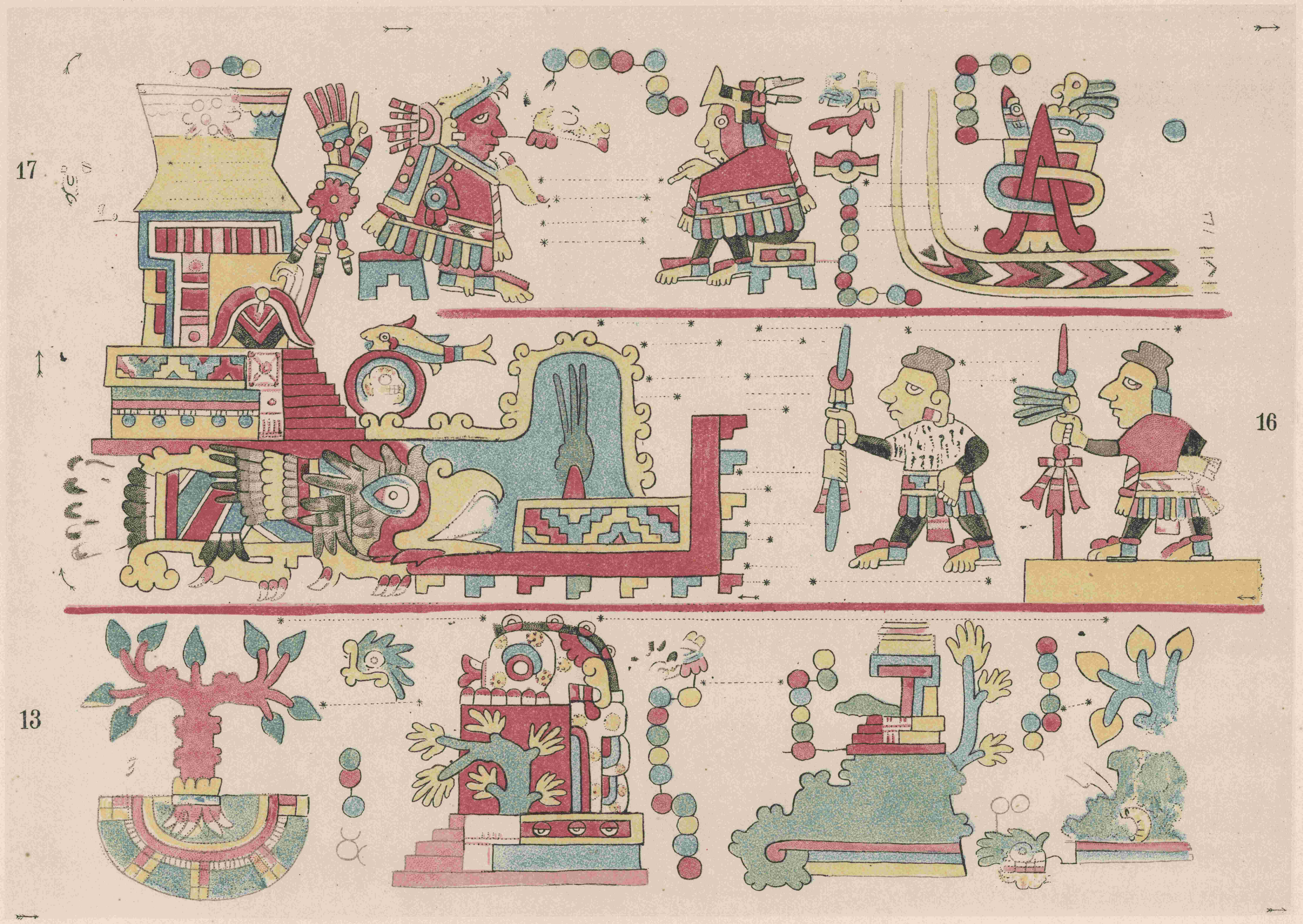
When the Junta Colombina reproduced the Codex Colombino in Antigüedades Mexicanas (1892), they transformed how the manuscript was read and understood:
- The original folding screen was designed to be unfolded and viewed as a continuous narrative, while the reproduction was bound as a book, encouraging a page-by-page, European style of reading.
- By assigning letters to panels and marking the front with asterisks and the back with primes, the Junta Colombina made the Codex Porfirio Díaz easier to read for nineteenth-century audiences. These interventions helped present Mexico’s Indigenous past as intelligible, ordered, and scholarly, all qualities that reinforced Porfirio Díaz’s goal of promoting Mexico internationally as a modern nation grounded in an ancient civilization.
- The reproduction also omits Mixtec glosses present on the original codex, replacing them with asterisks. This choice visually marked absence while privileging scholarly interpretation over Indigenous voices.
Together, these changes show how reproduction reshaped not only the codex’s form, but also its authority and meaning.